6061 vs 6063 Aluminium: Which Grade Should You Choose?
A clear comparison of 6061 and 6063 aluminium for machining, fabrication, structural work and visible sections.
Read Guide →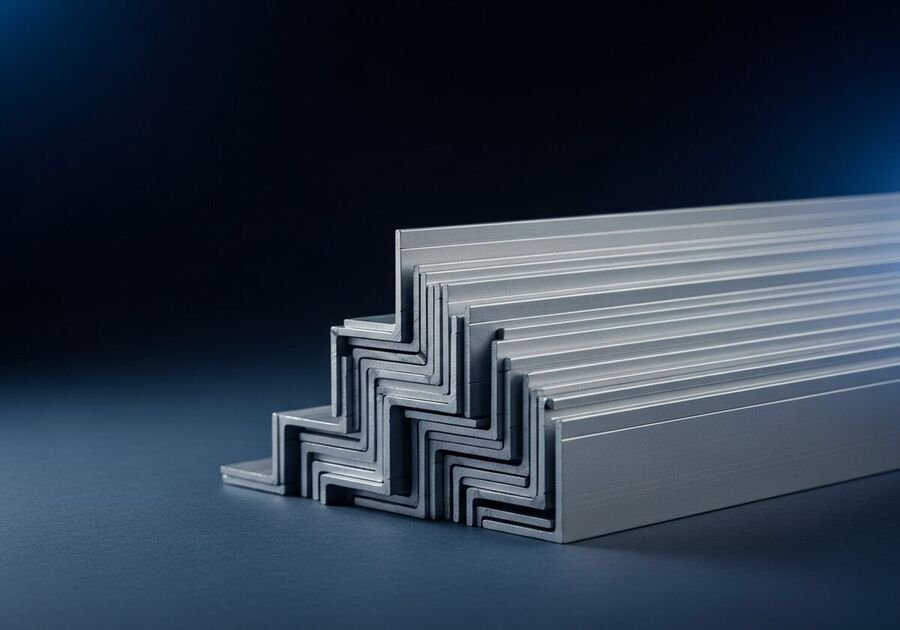
Equal and unequal leg L-sections at one-third the weight of steel angle — rust-free framing for facades, shelving, panels and modular structures.
Supplied from our Ahmedabad stockyard to engineering, fabrication and manufacturing buyers across Gujarat. Custom cutting and a same-day quotation are available for your required size.
The humble L-section does an enormous amount of work in construction and fabrication, and aluminium angle does it without the two headaches of steel: weight and rust. Our extruded angles have sharp, true corners and uniform wall thickness, so frames square up correctly and cladding lines stay straight. On site, one worker lifts what would take two with steel angle.
Equal-leg angles from 25×25mm to 150×150mm are regular stock, with unequal legs and multiple wall thicknesses available for jobs where one face carries fixing holes and the other carries load. Use 6063 for architectural and anodised work, 6061 where the frame is structural. Every piece can be cut to your bill of quantities before dispatch.
A clear comparison of 6061 and 6063 aluminium for machining, fabrication, structural work and visible sections.
Read Guide →Equal-leg angles from 25x25mm to 150x150mm are regular stock, with unequal legs and multiple wall thicknesses available for jobs where one face takes fixing holes and the other carries load.
Use 6063 for architectural and anodised work and 6061 where the frame is genuinely structural; both come with sharp, true corners and uniform wall thickness.
It carries no rust penalty and weighs about a third as much, so one worker lifts what would take two with steel angle, and cladding lines stay straight for years.
Yes, every piece can be cut to your required lengths before dispatch, so you receive a ready-to-assemble kit rather than standard bars to trim on site.
6063 angle anodises to a uniform, durable coat, making it the preferred choice for facades, shelving and visible modular structures.